

In recent years, AI-driven visual production has quietly reshaped how fashion brands create campaign imagery, especially for virtual model shoots and ecommerce visuals. Among the tools in this space, Botika has become a well-known option for generating studio-quality fashion photos without traditional photoshoots.
But as brands scale and visual demands become more diverse, many are exploring Botika Alternatives that offer greater flexibility, creative control, and production efficiency for commercial virtual photography workflows.
What is Botika AI
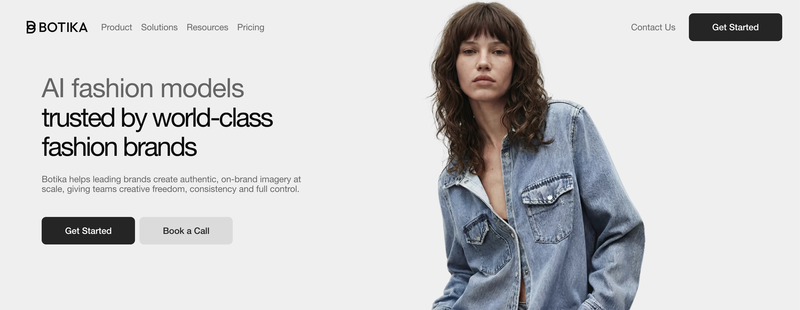
Botika AI is an AI-powered tool that helps fashion brands generate professional model photography without traditional photoshoots. Instead of hiring models, booking studios, and coordinating production teams, brands can create realistic, studio-ready fashion visuals digitally in much less time. It specializes in ecommerce product images and in generating consistent virtual models.
How Botika Works for Fashion Brands
At its core, Botika simplifies the process of producing fashion campaign visuals. Brands typically upload their product images, and the AI places them onto virtual models in clean, styled environments.
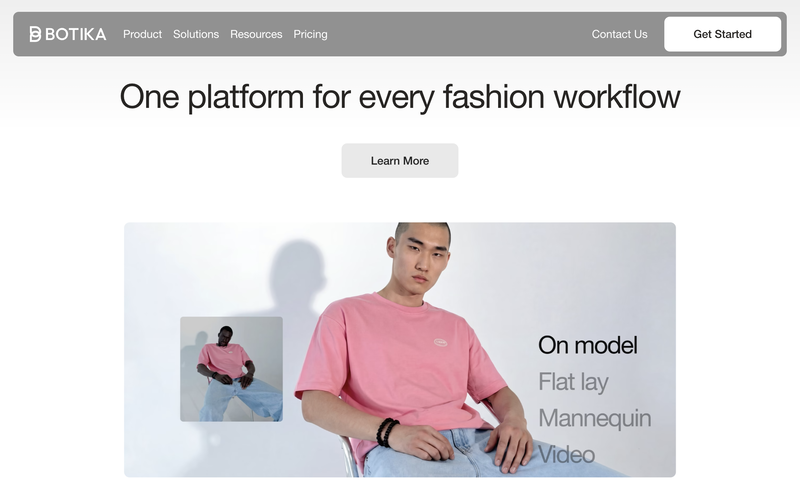
A typical workflow looks like this:
- Upload clothing product photos (flat lay or mannequin shots).
- Select model types, poses, and backgrounds.
- Generate AI-powered fashion images.
- Download ready-to-use ecommerce visuals.
This makes it especially useful for brands that need frequent content updates for online stores or seasonal campaigns.
Why Brands Choose Botika
Many fashion ecommerce teams turn to Botika because it removes much of the traditional production friction. Instead of coordinating logistics, they can focus on speed and scalability.
Key advantages include:
- Faster turnaround compared to traditional photoshoots.
- Lower production costs for model photography.
- Consistent visual style across product catalogs.
- Scalable output for large SKU collections.
For growing brands, this balance between quality and efficiency is often the main reason they adopt AI virtual photoshoot tools.
When Botika Might Not Be Enough
While Botika is effective for standard ecommerce imagery, it can feel limiting in more creative or brand-driven campaigns. As brands evolve, they often look for more flexibility in styling and visual storytelling.
Common limitations include:
- Less control over highly creative or editorial-style scenes.
- Limited customization in complex fashion narratives.
- Visual outputs can feel similar across different brands.
- Not always ideal for high-concept campaign storytelling.
This is exactly where many teams start exploring Botika alternatives that offer more creative freedom and advanced AI fashion production capabilities.
Key Considerations When Choosing an Alternative
When exploring alternatives to Botika, brands should keep several factors in mind to ensure the tool aligns with their production and creative goals:
- Customization Options: Look for platforms that let you tweak model appearance, poses, backgrounds, and lighting to match your brand identity.
- Scalability & Speed: The tool should handle large product catalogs efficiently without compromising visual quality.
- Creative Flexibility: Consider solutions that support both standard ecommerce shots and more editorial or campaign-driven visuals.
- Ease of Integration: Seamless compatibility with your existing workflow, design software, ecommerce platforms, or marketing tools can save significant time.
By evaluating alternatives through these lenses, brands can find a solution that combines efficiency with richer creative potential.
Top Botika Alternatives for AI Fashion Photography in 2026
When looking beyond Botika, several AI-powered platforms are emerging as strong options for fashion brands. Among them, Fashion Diffusion stands out for its comprehensive capabilities in commercial virtual photoshoots, while other alternatives offer complementary strengths for specific use cases.
Fashion Diffusion
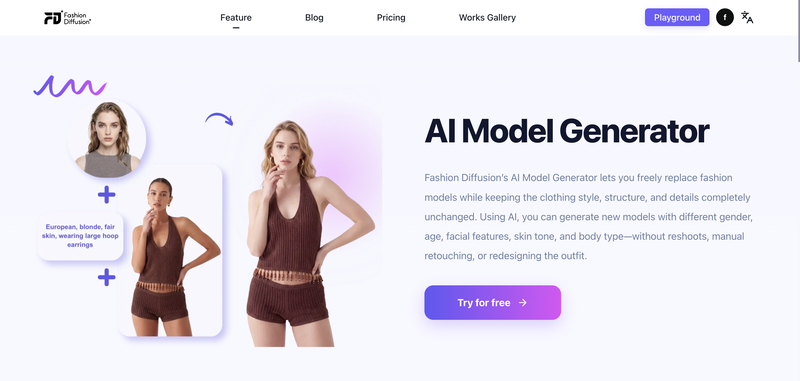
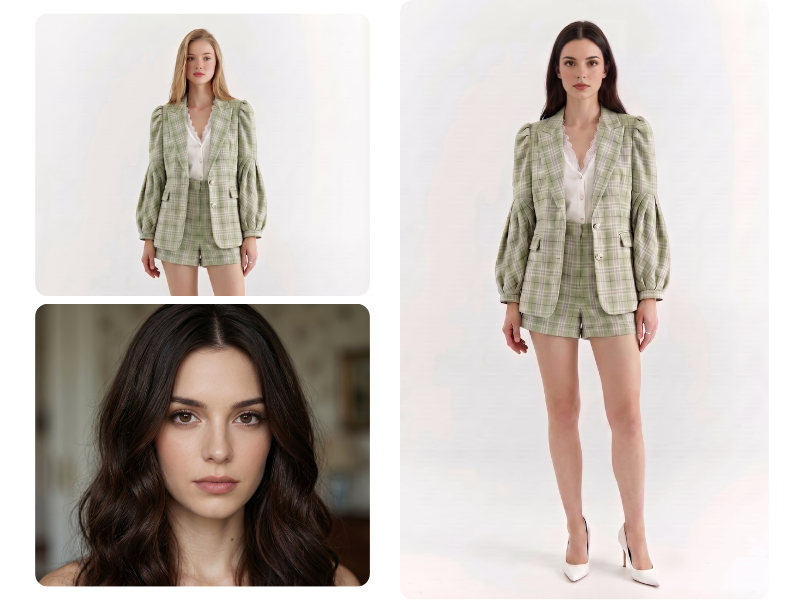
Fashion Diffusion is a leading platform for AI-powered fashion photography, enabling brands to produce professional, high-quality visuals without traditional photoshoots. It supports both AI model generations and realistic on-model fashion photos, helping ecommerce brands scale their content efficiently.
Main Features & Highlights:
- AI Model Generations: Create photorealistic models in multiple poses and outfits.
- Customizable Styling: Adjust clothing, accessories, and model appearances to match brand aesthetics.
- Batch Production: Efficiently handle large SKU collections for catalog consistency.
- Campaign-Ready Outputs: Produce editorial-style visuals, lifestyle setups, and lookbooks.
- Flexible Backgrounds & Lighting: Simulate studio or natural environments.
- Virtual Try-On Support: Offer customers interactive virtual try on experiences.
- Ecommerce Product Shots: Generate polished ecommerce product visuals ready for online stores.
Suitable For:
- Ecommerce brands need consistent, high-quality images.
- Marketing teams are creating seasonal campaigns or social media content.
- Creative agencies producing visuals for multiple clients.
- Brands seeking editorial-style, lifestyle, or interactive imagery.
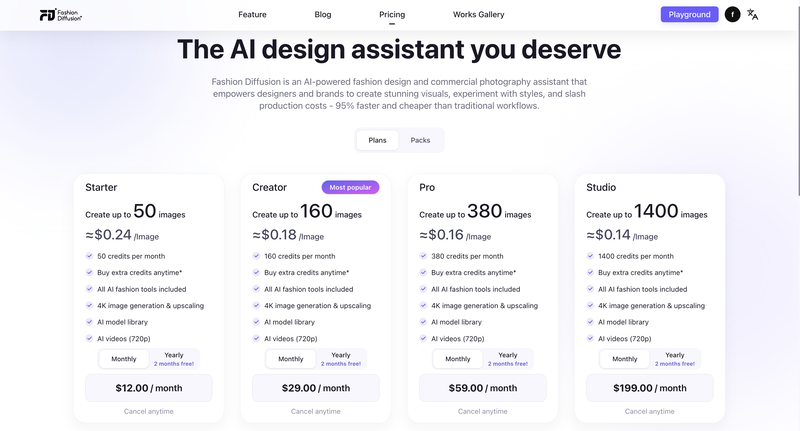
Pricing:
Fashion Diffusion offers subscription-based pricing with tiers depending on image volume, features, and usage needs (details available via platform inquiry)
Advantages:
- Built specifically for AI fashion photography, from clean ecommerce shots to campaign-style visuals.
- Supports scalable AI model generations for large fashion catalogs and fast campaign production.
- Produces polished on-model fashion photos without requiring traditional studio shoots.
- Flexible styling, backgrounds, and lighting controls for more brand-specific visuals.
- Includes virtual try-on capabilities for brands exploring more interactive shopping experiences.
Disadvantages:
- Focuses more on AI fashion photography and campaign visuals rather than interactive shopping features.
- Does not prioritize ultra-simple one-click workflows like some catalog-focused AI tools.
Style3D
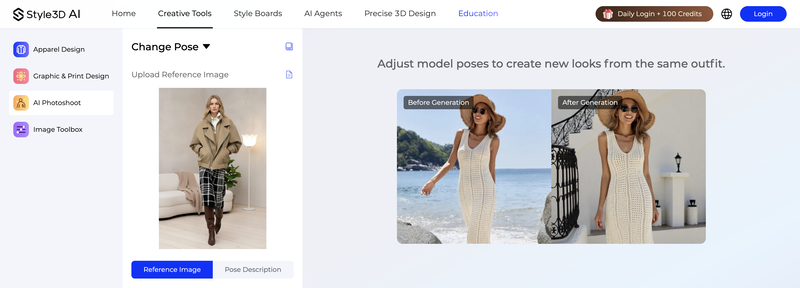
Style3D focuses on precise 3D garment visualization and virtual model control, making it ideal for showing clothing details. Its standout AI photoshoot change pose feature let users adjust model poses quickly, creating versatile product images without reshooting. This makes it a strong choice for brands and designers prioritizing garment accuracy and pose flexibility.
Main Features & Highlights:
- 3D Garment Simulation: Realistic folds, drapes, and fabric behavior.
- AI Photoshoot Change Pose: Adjust model poses efficiently.
- Model Animations: Simple movement previews for dynamic presentation.
- Multiple View Angles: Rotate and showcase garments from various perspectives.
Suitable For:
- Designers focusing on garment details.
- Brands needing technical visualization of fabrics.
- Fashion teams creating product catalogs with consistent model poses.
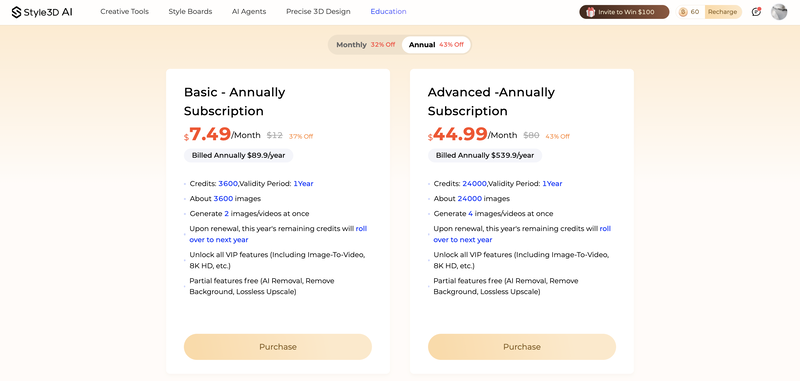
Pricing:
Style3D offers subscription plans with different tiers; some features are available in enterprise packages (exact pricing via inquiry)
Advantages:
- Strong 3D garment visualization with realistic fabric simulation.
- Useful for showcasing folds, textures, and garment construction details.
- The AI Photoshoot “Change Pose” feature makes it easier to create multiple product angles without reshooting.
- Supports more precise pose control compared to many basic AI photography tools.
Disadvantages:
- Focuses more on garment visualization than full AI fashion campaign generation.
- Lifestyle, editorial, and social-first visuals are less flexible compared to platforms built specifically for AI fashion photography.
PicJam
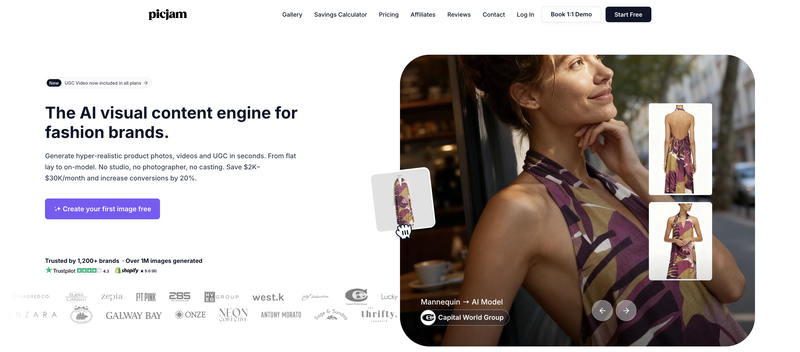
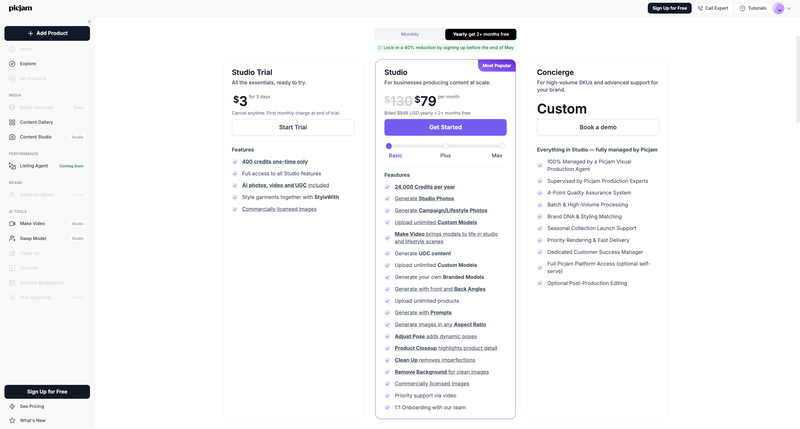
PicJam is a simpler AI image generation tool that helps create basic virtual model photos quickly. It’s suitable for small brands or rapid testing of visuals, though it offers less depth in styling and creative control.
Main Features & Highlights:
- Quick Image Generation: Fast output for product visuals.
- Preset Model Styles: Choose from limited model types and poses.
- Basic Backgrounds: Simple studio or plain backgrounds for ecommerce.
Suitable For:
- Small ecommerce brands.
- Teams are testing AI-generated visuals for new products.
- Brands needing rapid prototype imagery.
Pricing:
PicJam offers pay-per-image or subscription packages (affordable entry-level pricing)
Advantages:
- Simple workflow that makes AI fashion image generation accessible for smaller brands.
- Native Shopify integration helps streamline ecommerce product uploads.
- Repeatable presets help maintain a more consistent catalog style across products.
- Lower entry pricing compared to other AI fashion photography platforms.
Disadvantages:
- More focused on basic ecommerce product visuals than high-end AI fashion photography.
- Limited support for advanced features like consistent AI model identity or detailed virtual try-on experiences.
VModel
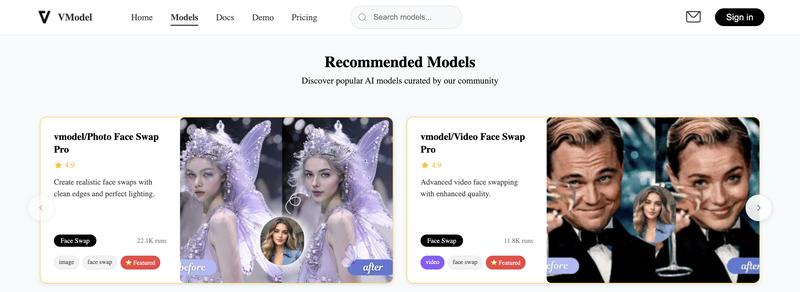
VModel is an AI platform focused on virtual model generation and batch fashion photography, making it ideal for brands with large product catalogs that need consistent and realistic visuals.
Main Features & Highlights:
- Photorealistic Virtual Models: Multiple poses and outfits.
- Batch Catalog Productions: Efficient for hundreds of SKUs.
- Moderate Styling Options: Customize model appearance and clothing.
- Simple Campaign Support: Can produce basic lifestyle or editorial images.
Suitable For:
- Ecommerce brands with large product catalogs.
- Teams needing high-volume image generation.
- Agencies producing consistent visuals across multiple clients.
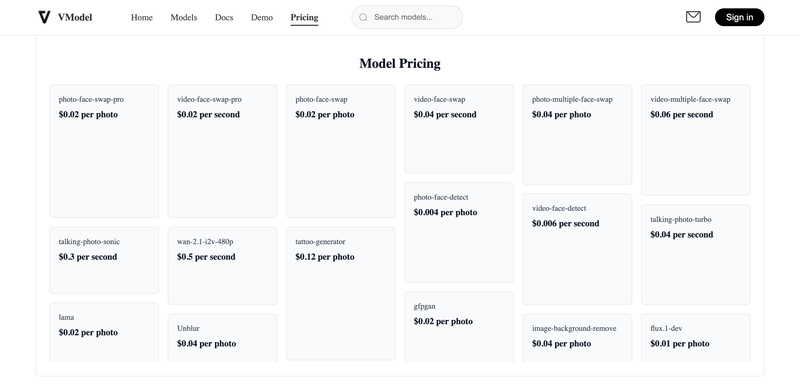
Pricing:
Subscription-based pricing depending on the number of images or models generated (contact platform for details)
Advantages:
- Efficient batch generation for large fashion catalogs, making it suitable for scaling ecommerce operations.
- Produces consistent virtual model outputs across multiple SKUs for unified product listings.
- Supports moderate customization of model appearance and styling for brand alignment.
Disadvantages:
- Creative control is more limited compared to platforms focused on AI fashion photography and campaign generation.
- Virtual try-on and interactive shopping features are not a core focus.
- Output variety can feel more standardized when producing large batches of images.
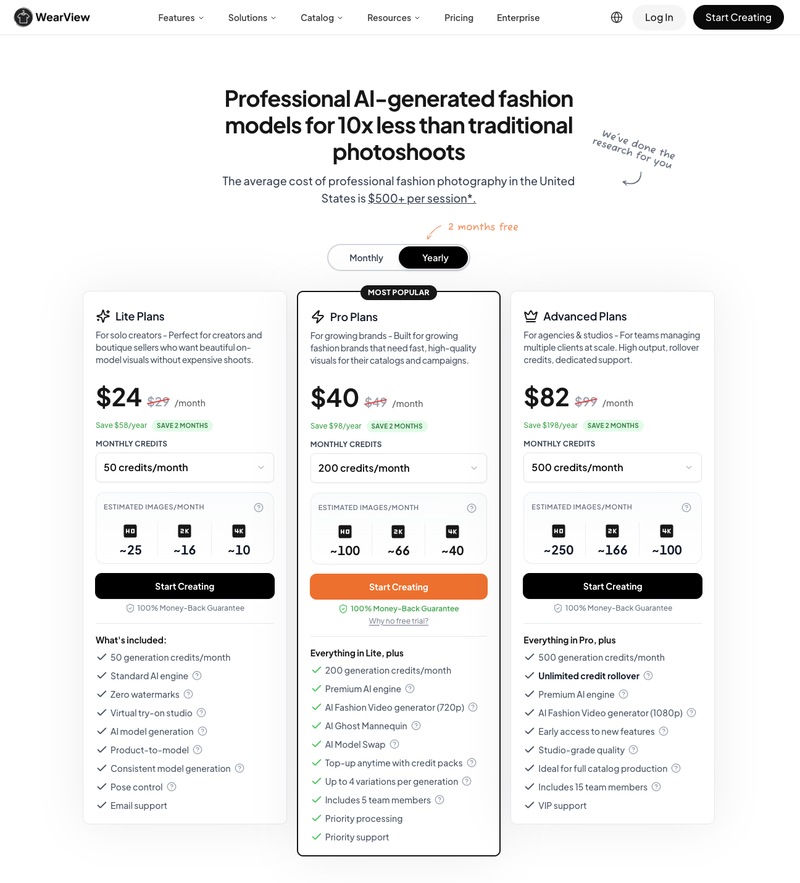
WearView
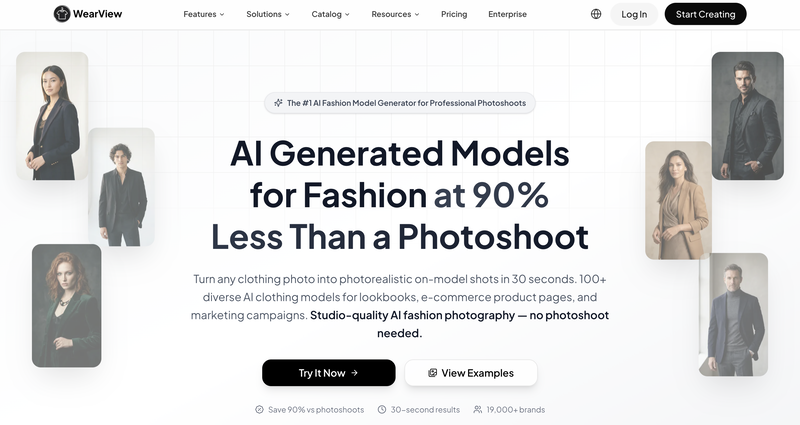
WearView focuses on virtual try-ons and interactive fashion experiences. It’s ideal for brands looking to provide customers with a more immersive shopping experience, though it may not fully replace high-resolution campaign imagery.
Main Features & Highlights:
- Virtual Try-On: Customers can see outfits on virtual models.
- Interactive Features: Supports ecommerce engagement and personalization.
- Multiple Model Options: Different body types and styles.
Suitable For:
- Brands offering immersive shopping experiences.
- Ecommerce platforms looking to increase conversion rates.
- Teams focused on interactive marketing rather than traditional campaigns.
Pricing:
Subscription or enterprise pricing based on interactive features and usage (details via platform inquiry).
Advantages:
- Strong feature set for fashion-focused AI visuals, including virtual try-on and pose customization.
- Supports interactive shopping experiences that go beyond standard product-to-model generation.
- Useful for brands experimenting with more immersive and personalized online shopping experiences.
Disadvantages:
- Batch processing and large-scale catalog management are less optimized compared to some ecommerce-focused platforms.
- Limited integration options for brands relying heavily on Shopify-based workflows.
- Editorial-style storytelling and advanced scene generation are not its primary strengths.
By considering these options, brands can find a platform that fits both their operational needs and creative ambitions, with Fashion Diffusion emerging as the most robust choice for professional virtual photoshoots.
Comparison Table: Botika vs Other AI Model Generator Alternatives
Choosing the right AI fashion photography platform often depends on what a brand values most. Some tools focus on speed and catalog efficiency, while others are better suited for editorial visuals, creative flexibility, or immersive shopping experiences. The comparison below highlights how Botika and its alternatives differ across key areas that matter in commercial virtual photoshoots.
| Platform | Best For | Creative Flexibility | Ecommerce Ready | Editorial/Campaign Support | Batch Production | Virtual Try-On |
| Botika AI | Standard AI fashion product photos | Moderate | High | Moderate | Moderate | No |
| Fashion Diffusion | Commercial virtual photoshoots & fashion campaigns | High | Moderate | Moderate | High | High |
| Style3D | 3D garment visualization | Moderate | Moderate | Low | Moderate | Moderate |
| PicJam | Quick AI fashion visuals | Low | Moderate | Low | Moderate | No |
| VModel | Batch virtual model generation | Moderate | High | Moderate | High | Limited |
| WearView | Interactive shopping experiences | Moderate | Moderate | Low | Moderate | High |
Among these options, Fashion Diffusion offers one of the most balanced solutions for brands that want both scalable production and stronger visual storytelling. Instead of focusing only on simple product shots, it gives fashion teams more room to create campaign-style imagery that feels closer to traditional commercial photography.
Who Should Use a Botika Alternative?
Not every brand needs to move away from Botika, but for those seeking more flexibility, faster production, or higher creative control, exploring alternatives can be a game-changer. Brands that rely heavily on ecommerce visuals, seasonal campaigns, or multi-platform marketing are most likely to benefit.
- Growing Fashion Ecommerce Brands: Those with large product catalogs who need to generate images quickly and consistently.
- Campaign-Focused Teams: Brands aiming for editorial-style visuals or lifestyle-focused marketing campaigns.
- Creative Agencies: Teams producing visuals for multiple clients, requiring both efficiency and customizable outputs.
- Brands Seeking Integration: Companies that want AI visuals to seamlessly fit into design, marketing, or ecommerce workflows.
In short, any fashion business looking to combine speed, quality, and creativity in its visual content production will find value in exploring Botika alternatives, especially platforms like Fashion Diffusion that specialize in commercial virtual photoshoots.
Evaluate Your Fashion Visuals with AI
For fashion brands aiming to stay competitive in the fast-paced ecommerce landscape, AI virtual photoshoots are no longer optional; they’re essential. While Botika provides a solid starting point, platforms like Fashion Diffusion offer the perfect balance of scalability, creative flexibility, and campaign-ready outputs, making it a standout alternative for brands that want more control over their visuals.
If you’re looking to streamline production, experiment with editorial-style campaigns, or simply generate high-quality fashion imagery faster, it’s time to explore Fashion Diffusion. Give it a try and see how AI can transform the way your brand creates stunning, professional visuals, without the constraints of traditional photoshoots.
FAQ
AI virtual photoshoot platforms generate realistic fashion images using digital models, clothing, and environments. They help brands create professional campaign visuals and ecommerce content without traditional photoshoots.
For standard ecommerce product shots and many campaign visuals, AI models can closely match real photography. However, for highly personalized or live-action campaigns, a hybrid approach combining AI and real models may be ideal.
Yes. Fashion Diffusion supports batch production, making it easy to handle hundreds of SKUs while maintaining visual consistency and quality.
Platforms like Fashion Diffusion allow you to adjust model appearance, clothing, poses, and even backgrounds to match your brand’s aesthetic and campaign vision.
Modern AI platforms can produce high-quality, editorial-style visuals ready for social media, lookbooks, ads, and ecommerce listings.
Most AI fashion tools are designed for ease of use, with intuitive interfaces. Some advanced customization options may require basic familiarity with design or editing workflows.


